How To Reduce
SWEAT STAINS & DEODORANT MARKS
What Is The Difference Between
Sweat And Deodorant Stains?

- Sweat Stains: are usually yellow marks on light or white clothing, especially common under the arms. They can form when perspiration combines with natural oils and antiperspirant ingredients and become absorbed into fabric fibres2.
- Deodorant Stains: typically appear as white marks on dark clothing. They arecaused when product residue transfers onto fabric before it has fully dried1.
Did You Know? Sweat itself is not yellow. Yellow underarm stains usually develop over time when perspiration interacts with antiperspirant ingredients, body oils and fabric build-up1.
Understanding the difference can help you choose the most effective method for removing underarm stains from clothing.
5 Ways To Help Prevent
Sweat And Deodorant Stains
Preventing sweat stains and deodorant marks is often easier than removing them. Small changes to your routine can help reduce residue build-up and keep clothes looking fresher for longer.

- 1. Apply Antiperspirant Correctly
How you apply antiperspirant can help reduce transfer onto clothing and minimise visible marks2⟧.
Allow It to Dry Fully: Wait until your antiperspirant has completely dried before getting dressed. This helps reduce the amount of residue transferred onto fabric.
Apply a Thin, Even Layer: One light layer is usually enough. Avoid over-applying, as excess product may increase build-up on clothing.
Use Before Bed When Possible: Night-time application allows the formula more time to work while sweat glands are less active, helping improve overall effectiveness the next day.
Allowing antiperspirant to fully absorb before dressing may help reduce its contact with clothing and support longer-lasting freshness. - 2. Wash Clothing Soon After Wearing
Wash clothes soon after wearing to help prevent sweat, deodorant and
body oils from settling into fabric fibres1⟧.
- Wash T-shirts, white shirts and activewear soon after use.
- Avoid leaving damp or worn clothing for long periods.
- Follow the care label instructions for the best fabric care. - 3. Choose Breathable Fabrics
Choosing breathable fabrics can help reduce the build-up of moisture and may help minimise the appearance of underarm sweat stains over time5⟧.
- Natural fibres such as cotton can help improve airflow around the body.
- Breathable fabrics allow moisture to evaporate more easily, helping reduce build-up in the underarm area.
- Looser fits can reduce friction and limit contact in sweat-prone areas.
- 4. Be Mindful of Factors That Increase Sweating
Sweating levels can vary depending on lifestyle, environment and
individual factors6⟧.
- Warm weather and heat.
- Exercise or physical activity.
- Stress or emotional situations.
- Certain foods and drinks, such as caffeine or spicy foods. - 5. Choose an Antiperspirant That Suits Your Need
The right antiperspirant can help reduce visible marks while supporting
everyday freshness, and switching formulas or applying them correctly
may further improve results and help reduce sweat and deodorant stains
over time7⟧.

Help Reduce Clothing Stains
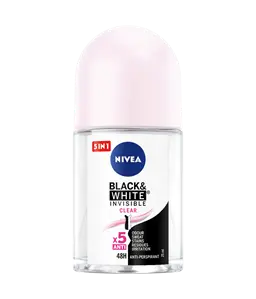
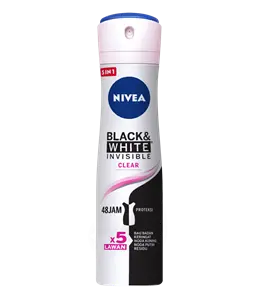
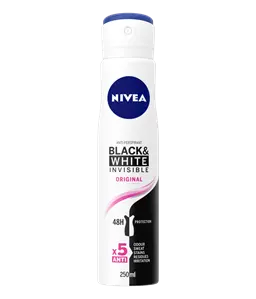
With NIVEA Black & White Invisible
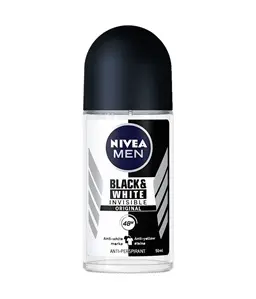
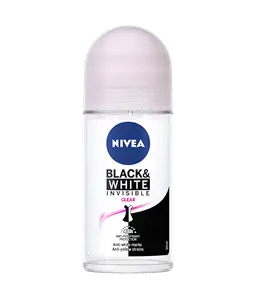
The NIVEA Black & White Invisible range is designed to help protect black clothing from white marks and white clothing from yellow stains with Dual Shield Technology. Providing reliable 72h protection against sweat, odour and irritation, it delivers invisible protection while caring for the skin and supporting everyday freshness. Available in spray, roll-on and stick formats for both men and women, the range offers options to suit different preferences and routines.
FOR WOMEN
How To Help Get Rid Of
Deodorant And Sweat Stains From Clothes

White Clothing (Yellow Sweat & Deodorant Stains)
White fabrics often show yellow underarm stains and deodorant marks more clearly, so prompt treatment is recommended1⟧.
How to Remove Sweat Stains:
Rinse the stained area with cold or lukewarm water, as hot water may set stains
into fibres.
- 1. Apply a suitable stain-removal treatment or liquid detergent.
- Leave for 20 to 30 minutes, or for the length of time recommended on the stain remover's label.
- Rinse and allow to dry.
- Check the stain and repeat if needed
- Wash according to the garment care label.
- Check the stain before drying and repeat if needed.
How to Remove Deodorant Stains:
- For fresh stains, gently rub with a nylon stocking or cloth.
- If the stain is already set or a nylon stocking isn't enough, treat the area with a liquid detergent or stain remover.
- Gently rub to help lift residue.
- Leave for 10 to 15 minutes.
- Wash according to the garment care label.
Tip: Avoid bleach, as it may intensify yellow underarm staining and weaken fabric fibres over time9⟧.
Dark & Coloured Clothing (White Marks & Residue)
On darker fabrics, deodorant marks are usually more visible, while sweat stains may appear as light discolouration in the underarm area.
How to Remove Sweat Stains:
- First, test any pre-treatment product on an inconspicuous area.
- Rinse the stained area with cold water.
- Apply a stain remover or detergent for coloured fabrics and gently rub the fabric.
- Leave for 10 to 15 minutes, or for the length of time recommended on the product label.
- Check whether the stain has faded and repeat the treatment if needed.
- Wash according to the garment care label.
- Allow the garment to air dry and check the stain has been removed before ironing.
1. Remove dry residue with a nylon stocking, soft brush or damp cloth.
2. For stubborn marks, apply liquid detergent suitable for coloured fabrics.
3. Leave for 10 to 15 minutes.
4. Wash according to the garment care label.


For stains on the go:
- Gently rub the fabric with a cloth or against itself to help remove fresh deodorant residue.
- Use a damp cloth or wipe with soap to help reduce more stubborn marks.
- Blot rather than rub to avoid spreading the stain.
- Use a stain remover pen if available for quick, targeted treatment.